The 10 Key Differences Every E-Commerce Business Must Know:
Not sure whether your business needs a the right solution or place or even who can do a compare between a distribution center vs warehouse? This guide breaks down the key differences—so you can choose the right provider and best logistics model that can reduce costs, and improve customer delivery experience across UAE and GCC.
Introduction
At first glance, the terms distribution center and warehouse may seem interchangeable—after all, both are facilities used for storing products. However, in reality, their roles are significantly different. Understanding these differences is essential for selecting the right logistics model, controlling operational costs, and improving delivery performance.
Whether you run an online store, a wholesale business, or a multi-channel retail brand, choosing the right facility impacts everything—from inventory efficiency and shipping speed to customer satisfaction and scalability.
As businesses grow, they face one of the most important supply chain decisions:
✅ Where should we store products?
✅ How do we deliver them efficiently to customers?
In this article, we explain the 10 most important differences between a distribution center vs warehouse, helping UAE-based and GCC e-commerce businesses make smarter, faster logistics decisions.
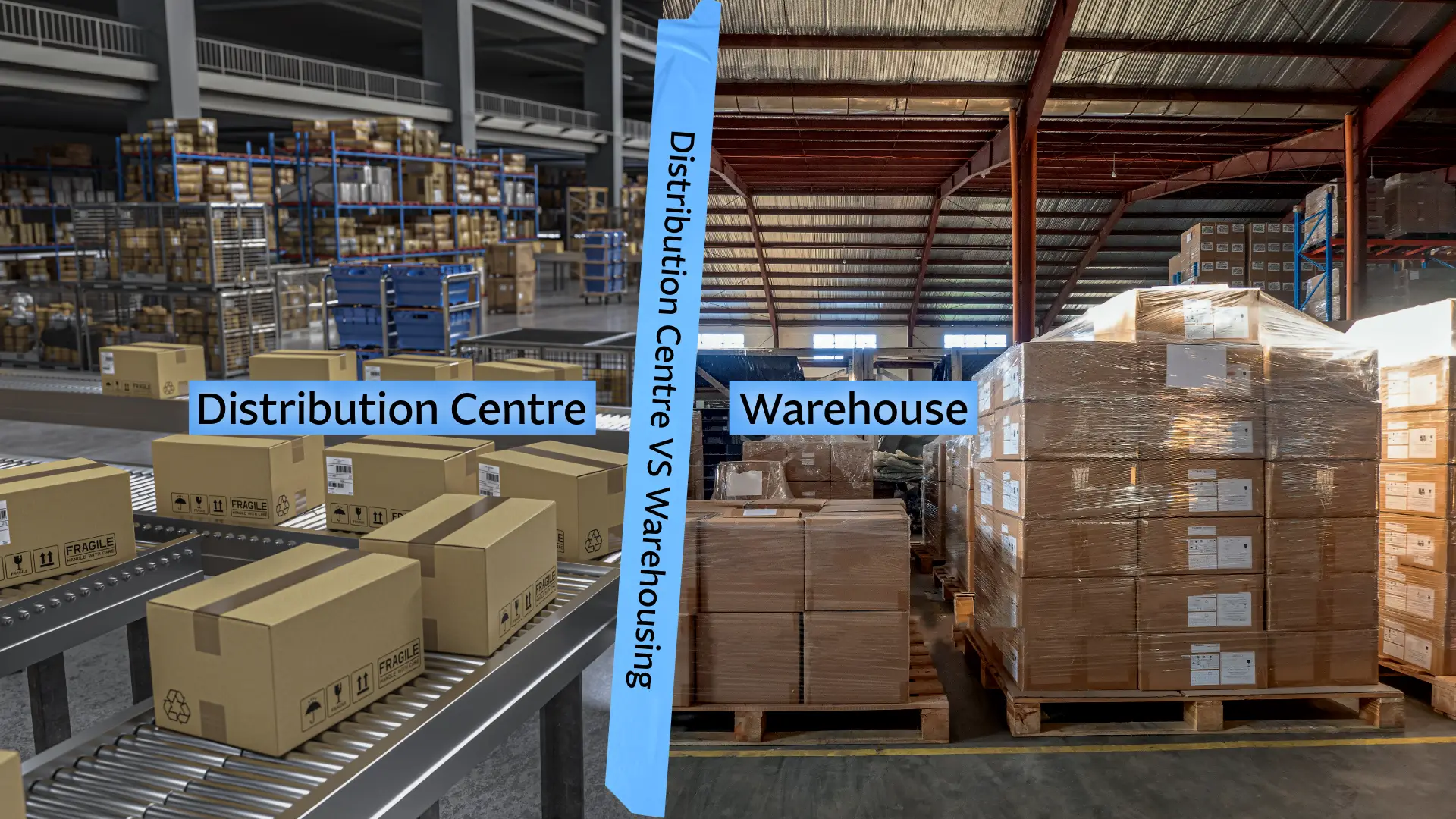
1) The Primary Purpose (The “Why”) (Part 1)
✅ Distribution Center
A distribution center exists to move products quickly to customers. Customers may never see the facility, but they experience its performance through:
- Fast delivery
- Order accuracy
- Smooth returns
- Efficient packaging
Distribution centers are designed for order processing, pick & pack, and fast dispatch, often within hours or days. These centers frequently work with 3PL logistics providers, making them ideal for e-commerce sellers who don’t want to run fulfillment operations internally.
✅ Warehouse
A warehouse, on the other hand, is designed primarily for long-term storage. Companies use warehouses to store:
- Raw materials
- Bulk inventory
- Extra stock
- Seasonal items
The goal is not speed, but safe storage of large quantities until the goods are needed for distribution to retail stores, wholesalers, or distribution centers.
📌 Think of it like this:
- A warehouse is your business “storage room”
- A distribution center is your “delivery engine”
2) Storage Duration
✅ Distribution Center
Distribution centers support short-term storage. Goods arrive, are organized, and leave quickly once orders are received. Efficient distribution centers have fast inventory turnover, with products rarely sitting for long periods. This model supports modern customer expectations such as same-day or two-day delivery.
✅ Warehouse
Warehouses support long-term storage, often holding inventory for months or even years. Warehouses work best for bulk products, slow-moving inventory, or seasonal stock.
📌 If your business moves inventory daily, you need a distribution center.
If your business stores inventory until demand rises, you need a warehouse.
3) Activities Inside the Facility
✅ Distribution Center Activities
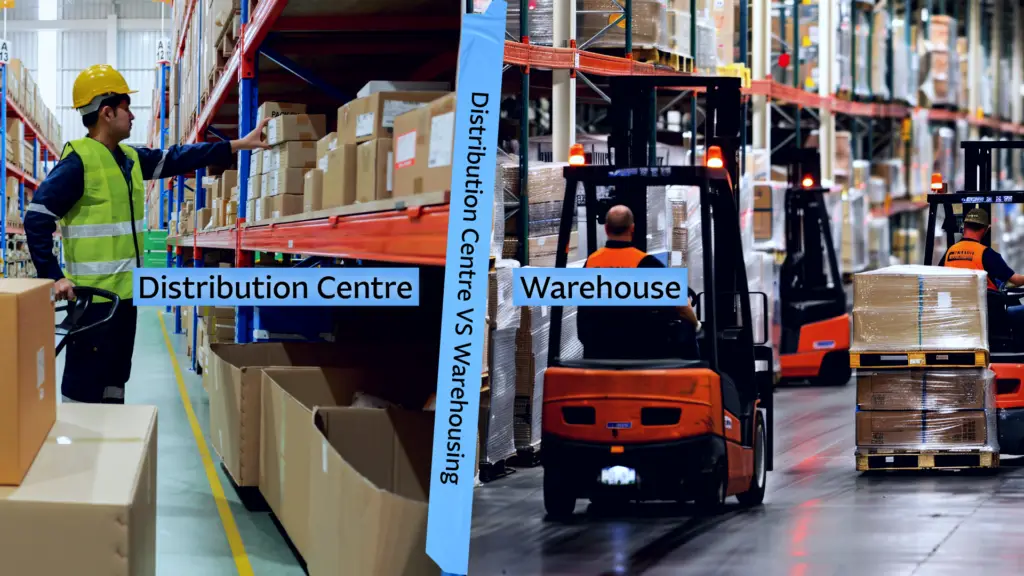
Distribution centers are highly active and fast-paced. Teams continuously:
- Receive shipments
- Scan barcodes
- Put products into allocated bins
- Pick and pack orders
- Apply branded packaging
- Coordinate shipping with couriers
- Process returns and restock items
Most distribution centers operate extended hours or 24/7, especially during peak e-commerce seasons.
✅ Warehouse Activities
Warehouses are relatively quieter. Their main activity is storage. Goods are:
- Received
- Stacked on pallets
- Placed on shelves
- Counted periodically through audits
Shipments leaving warehouses are typically bulk transfers to retailers, distribution centers, or business locations—not individual customer deliveries.
📌 Distribution center = active operations
📌 Warehouse = passive storage
4) Technology and Automation
✅ Distribution Centers
Technology is the backbone of a modern distribution center. When a customer places an online order, automated systems trigger pick-and-pack operations immediately. Distribution centers often use:
- Advanced inventory systems
- Conveyor belts
- Automated picking support
- Real-time order tracking
- Technology implementation in advanced centers
These tools improve speed, accuracy, and synchronization with online platforms.
✅ Warehouses
Warehouses also use technology, but usually in a simpler form. Most rely on:
- Warehouse Management Systems (WMS)
- Basic inventory tracking
- Stock location mapping
Warehouses do not require constant integration with e-commerce platforms because they are not designed for daily consumer-level order fulfillment.
📌 If your business needs real-time order updates + e-commerce integration → distribution center
📌 If your focus is stable stock storage → warehouse
Distribution Center vs Warehouse: Which One Is Right for Your Business?
The best choice depends on your business model:
✅ Choose a warehouse if you need bulk storage for long periods (raw materials, seasonal items, wholesale shipments).
✅ Choose a distribution center if you run an e-commerce business requiring fast order fulfillment and scalable delivery.
✅ Choose both if your business is growing and needs a hybrid model—warehouse for bulk stock, distribution center for customer delivery.
This hybrid model often delivers the best balance between cost and speed.
The Remaining 6 Differences (Part 2)
5) Cost Structure
✅ Distribution Center Costs
Typically include:
- Storage charges (per shelf, pallet, or cubic feet)
- Pick & pack fees (per item or per order)
- Outbound shipping charges
While flexible, these costs rise with activity. If products stay too long in a distribution center, storage fees may increase.
✅ Warehouse Costs
Warehouses usually have fixed costs based on:
- Space usage
- Pallet location rental
- Storage duration
Warehousing is often cheaper for slow-moving or bulk inventory but does not include order fulfillment services.
6) Scalability for E-Commerce Growth
✅ Distribution Centers
Distribution centers are built for scalability. As sales increase, the center can handle higher order volumes without the business needing to hire more staff or build new processes. They already have:
- Workforce
- Technology
- Courier relationships
- Optimized workflows
✅ Warehouses
Warehouses can scale storage but not fulfillment. If you rely only on a warehouse, you still need to build operational processes for pick & pack, shipping accounts, packaging material sourcing, and customer delivery.
As UAE e-commerce grows, customers expect fast delivery, accurate orders, and smooth returns. Choosing the wrong logistics model can lead to slow shipping, high costs, poor inventory control, and lower customer satisfaction. Understanding how distribution centers differ from warehouses helps you scale confidently.
7) Speed of Operations
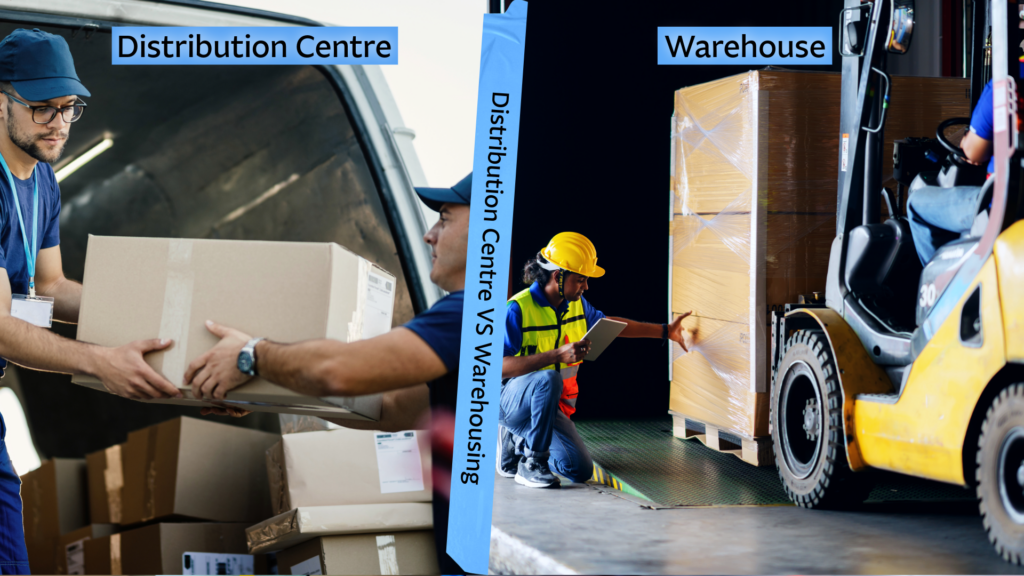
✅ Distribution Center
Orders can be processed within hours. Many distribution centers offer same-day or next-day fulfillment, similar to Amazon-level expectations.
✅ Warehouse
Operations are slower, as warehouses are designed for bulk movement. Products may sit for weeks or months, and shipments are usually in large quantities, requiring longer transit timelines.
8) Staffing Requirements
✅ Distribution Center
Needs a large workforce:
- picking teams
- packing teams
- labeling teams
- return handling teams
- customer order support during peak seasons
✅ Warehouse
Needs fewer staff—mainly:
- Forklift operators
- Inventory controllers
- Warehouse supervisors
9) Role in the Supply Chain
✅ Distribution Center
Operates near the end of the supply chain—close to the customer. It supports last-mile delivery, which is usually the most expensive part of logistics.
✅ Warehouse
Operates earlier in the supply chain. It stores products between factories, suppliers, distributors, and retail networks.
10) Customer Experience Impact
✅ Distribution Center
Direct impact on customers through:
- Fast delivery
- Accurate orders
- Smooth returns
- Better packaging
A high-performing distribution center results in:
* Better reviews
* Repeat purchases
* Higher customer lifetime value
✅ Warehouse
Indirect impact. Warehouses help ensure products are available but do not control delivery speed or accuracy.
📌 In modern e-commerce, customer experience is the competitive advantage—and distribution centers deliver it.
Conclusion
In today’s fast-moving e-commerce environment across the UAE and GCC, understanding the difference between distribution center vs warehouse is a key factor in sustainable business growth. Whether you choose one or a hybrid approach, the right decision ensures:
✅ Smooth supply chain flow
✅ Controlled costs
✅ Scalable fulfillment
✅ Stronger customer satisfaction
At GHS Logistics Fulfilment Centre (fulfilment.ae), we support businesses with scalable fulfillment solutions through strategically placed distribution operations—helping you deliver faster, manage inventory smarter, and grow sustainably.
Quick Summary
Bullets:
- A warehouse stores goods long-term (bulk, slow-moving stock).
- A distribution center fulfills orders quickly (pick, pack, ship).
- Distribution centers improve delivery speed and customer satisfaction.
- Many brands use a hybrid model (warehouse + distribution center).
- The best choice depends on your inventory movement & sales channels.
Explore our Fulfilment Services in UAE
Explore our Warehouses & bulk storages
Frequently Asked Questions (FAQ)
What is the difference between a distribution center vs warehouse or 3PL provider?
A warehouse is designed for long-term storage of goods, while a distribution center is built for fast order fulfillment, pick and pack operations, and rapid shipping to customers. Distribution centers support e-commerce delivery and customer experience, while warehouses focus on safe storage and bulk movement.
Is a distribution center better than a warehouse for e-commerce businesses in the UAE?
Yes. For e-commerce businesses in the UAE, distribution centers are usually more effective because they offer fast order processing, real-time inventory updates, and quick shipping to customers. Warehouses are better for bulk storage but do not provide fulfillment speed and customer delivery performance.
When should a business use a warehouse instead of a distribution center?
A business should use a warehouse when it requires long-term storage for bulk inventory, raw materials, seasonal stock, or slow-moving items. Warehousing is ideal for wholesalers, manufacturers, and businesses that move goods in large quantities rather than shipping individual orders.
Can a business use both a warehouse and a distribution center?
Yes. Many growing businesses use a hybrid model where warehouses store bulk inventory and distribution centers handle fulfillment and customer deliveries. This approach helps balance cost efficiency with speed and scalability.
How does a distribution center improve customer experience?
Distribution centers improve customer experience by enabling faster delivery, higher order accuracy, smoother returns management, and better packaging. This leads to better reviews, repeat purchases, and stronger customer loyalty.
How does the cost structure differ between a distribution center and a warehouse?
Distribution centers usually charge for storage plus fulfillment services such as pick and pack and shipping. These costs increase with order activity. Warehouses typically charge fixed rates based on space and storage time, making them more predictable and often cheaper for slow-moving or bulk inventory.
Do distribution centers use more advanced technology than warehouses?
Yes. Distribution centers often use advanced automation such as barcode scanning, Advance inventory systems, conveyor systems, and real-time order tracking to support fast fulfillment. Warehouses may use WMS systems but usually operate with simpler technology since they focus on storage rather than daily order processing.
What type of facility is best for fast delivery in UAE and GCC markets?
A distribution center is best for fast delivery because it is designed to process orders quickly and dispatch them to customers using optimized workflows, courier integration, and real-time inventory systems. This is critical for UAE and GCC e-commerce businesses that compete on delivery speed.
How can GHS Logistics Fulfilment Centre support distribution and warehousing in the UAE?
GHS Logistics Fulfilment Centre is one of group of logistics companies that supports supply chain and they provides scalable distribution and warehousing solutions for UAE and GCC businesses, including inventory management, pick and pack fulfillment, last-mile delivery support, and integrated logistics services tailored to e-commerce operations.