What Customers Don’t See: How E-Commerce Fulfilment Really Works Behind the Scenes
Customer Insights into How E-Commerce Fulfilment Works as service and its Operationally Works and Items are Quickly Delivered (Part 1)
Introduction:
The Invisible Engine Behind Every Online Order
Behind every fast, accurate, and convenient online delivery, there is an invisible system working relentlessly behind the scenes. As e-commerce becomes an integral part of daily life, its growth continues at an unprecedented pace—especially across the UAE, GCC, and global markets.
For many consumers (or customers of E-commerce customer ), the online shopping feels effortless and here below how he/she sees how e-commerce fulfilment works:
Search → browse → select → click “buy” → wait for delivery.
In this article, we reveal key insights customers should know about actual system on how e-commerce fulfilment works, and why fast delivery is never accidental.
1) E-Commerce Fulfilment Is a High-Tech Operation
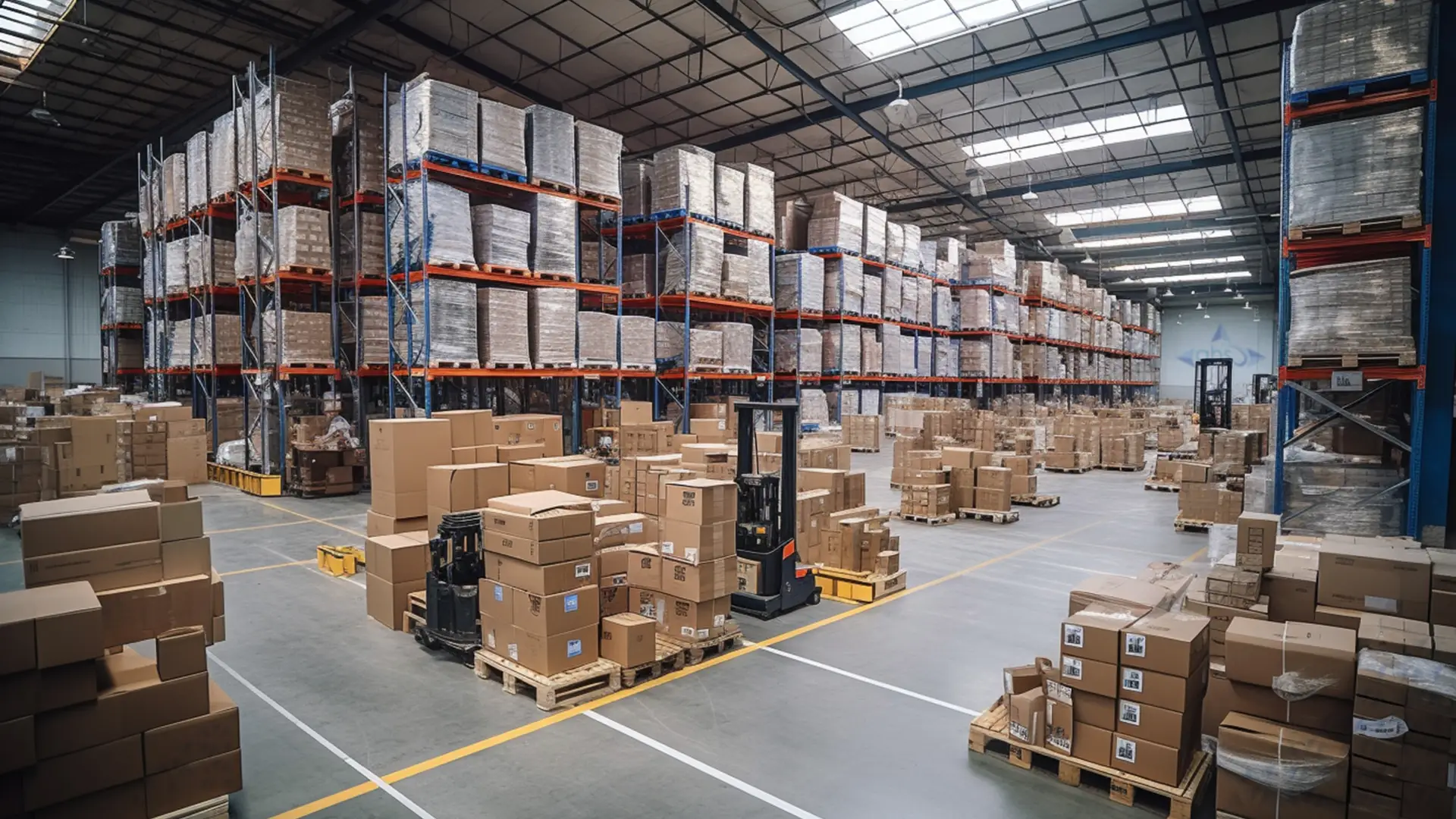
Modern fulfilment centers are no longer manual warehouses filled with paperwork and heavy labour. Today, they are highly automated distribution hubs, powered by AI, robotics, conveyor systems, and advanced Warehouse Management Systems (WMS).
What used to be labour-intensive processes have evolved into smart, data-driven operations. Robots now assist with:
- picking products from shelves
- scanning barcodes
- sorting items
- directing goods to packing stations
- optimizing storage locations
Human teams focus on quality control, supervision, exception handling, and performance monitoring.
The Role of Automation in Fulfilment
Automation plays a critical role by:
- forecasting demand
- identifying low stock levels
- optimizing workflow
- reallocating labour dynamically
For example, if a product suddenly trends on social media, Automation systems can instantly prioritize picking and packing for that item—ensuring enough orders are prepared and shipped before demand spikes further.
Summary:
When your order arrives just hours after purchase, it’s not luck. It’s the result of advanced technology coordinating thousands of actions at the same time.
2) Fast Shipping Comes at a Cost
Many customers assume shipping is simple—and cheap. In reality, fast shipping is one of the most expensive elements of e-commerce fulfilment.
Same-day or next-day delivery requires:
- strategic fulfilment center locations
- partnerships with high-performance courier companies
- optimized transport routes
- real-time tracking systems
- contingency planning
At GHS Logistics Fulfilment Centre, these elements are carefully integrated to deliver speed without compromising accuracy.
Urban Fulfilment & Micro-Distribution
To achieve ultra-fast delivery, many companies invest in urban micro-fulfilment centers—small warehouses located close to dense residential areas. These reduce delivery distance and enable delivery within hours.
However, building and maintaining this infrastructure is costly. Seasonal demand spikes, weather conditions, and last-mile delivery challenges add further complexity.
That’s why so-called “free shipping” often includes hidden costs already factored into the product price.
Summary:
Fast delivery is not magic—it’s a carefully coordinated and costly logistics effort.
For more details about GHSL E-commerce Delivery, please click here.
3) Inventory Management Is Far More Complex Than It Looks
Customers see a simple message: “In Stock.” or GHSL preferred name “on hand.”
Behind that message is a complex real-time inventory system.
E-commerce businesses rely on live inventory management platforms that track stock across:
- multiple warehouses
- retail stores
- online marketplaces
- international regions
Inventory Intelligence
Inventory systems integrated can:
- analyze past sales data
- detect seasonal patterns
- respond to marketing campaigns and trends
- reallocate stock automatically
For example, if a summer fashion item suddenly gains popularity, GHSL Systems can redirect inventory from multiple warehouses to regions with the highest expected demand—before shortages occur (Auto Replenishment based on area demand).
This prevents:
- overselling
- delayed orders
- consumers dissatisfaction
Summary:
That simple “In Stock” label represents a complex network of forecasting, automation, and stock synchronization.
For more details about GHSL Inventory and automation, please click here.
4) Returns Are One of the Biggest Fulfilment Challenges
Returns are often overlooked— and yet it takes 5-14days in 93% of fulfilment service providers as per +200 international large seller
Where returns are among the most complex and costly parts of e-commerce fulfilment.
From a consumer’s perspective, returns feel easy.
From a logistics perspective, returns involve:
- reverse transportation
- inspection and quality checks
- restocking or disposal
- system updates and refunds
How GHSL Improved its Return Management
GHSL had predicted this challenge at very early stages as one of its Six sigma practices initiated by the Founder Mr. Ghazwan M.D. Sunji, who had formed a set of SOP’s to define a preventive action prior such incident as well as other set of SOP’s called “Return Avoidance” . these had slashed returns for more 60% back into 2018-2019 collected statistics.
Currently after AI involvement by E-commerce businesses are for data analytics to it had became more easier to:
- identify products with high return rates
- improve product descriptions and sizing guides
- optimize packaging to reduce damage
- predict return behavior
Advanced reverse logistics networks ensure returned items are processed quickly, reducing response time and operational cost.
Summary:
Smooth returns don’t happen by accident, it is part of consumer nature for accepting and rejecting products at different standards that can vary from a person to another. However on operational part; it requires advanced planning, technology, labour, and logistics expertise.
5) Packaging Is a Science, Not Just a Box
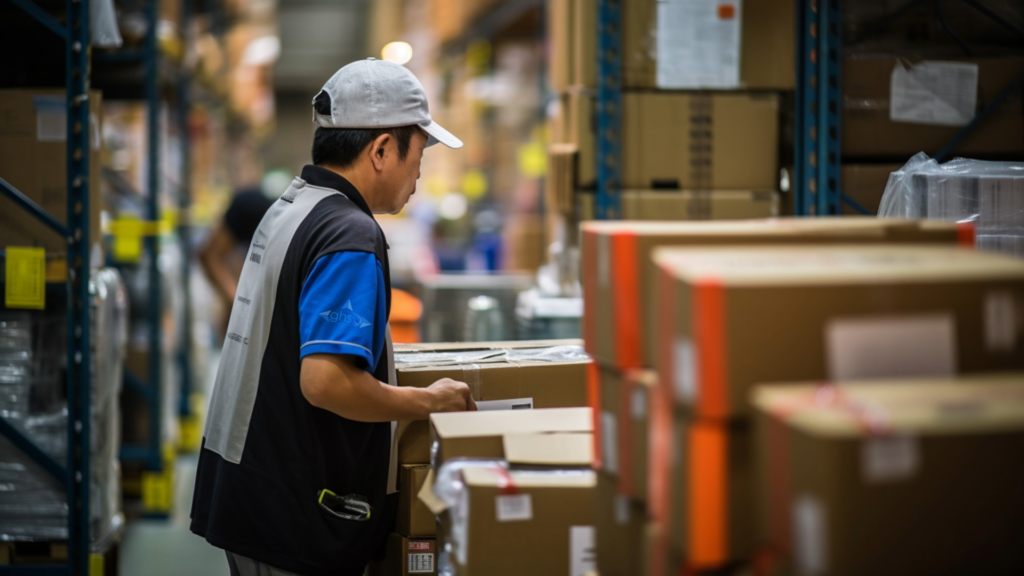
Packaging plays a critical role in leaving the first impression to consumer upon receiving the purchased items to reflect the paid value but not only that it, also you must look into these below list as well :
- protecting products
- reducing shipping cost
- enhancing brand perception
- improving consumer experience
Yet most customers rarely think about it.
Modern fulfilment centers use smart packaging systems that:
- automatically select the right box size
- reduce dimensional weight charges
- add protective fillers
- apply branding elements (stickers, messages)
Sustainability in Packaging
Many companies now use:
- recyclable cartons
- biodegradable fillers
- plant-based plastics
This responds to growing consumer demand for eco-friendly practices while maintaining protection and cost efficiency.
Summary:
Every packed box is a balance of logistics strategy, cost control, sustainability, and brand experience.
For more details about GHSL protective packing, please click here.
Conclusion (Part 1)
Fast, reliable e-commerce delivery is the result of technology, logistics expertise, and strategic planning working together behind the scenes. What looks simple to customers is actually one of the most complex operational models in modern commerce.
By this we completed the first part of “How E-commerce fulfilment works”, and if you feel it is a useful content, don’t forget to rate us on google reviews (GHS Logistics Fulfilment Centre) and feel free to save this page or share it to a friend or family who is running or might consider to start and E-commerce business.
📌 In Part 2,
We will continue exploring more behind-the-scenes insights—covering last-mile delivery, customer communication, pick accuracy, and this how e-commerce fulfilment works globally from inside, like GHS Logistics Fulfilment Centre make it all work seamlessly.
F.A.Q.
On How E-commerce Fulfilment Works? (Part 1)
What is fulfilment center’s do ? and how e-commerce fulfilment works?
E-commerce fulfilment is the process of receiving inventory, storing it, picking and packing customer orders, shipping parcels, and managing returns. It is the operational system that enables online stores to deliver orders accurately and on time.
What happens behind the scenes after I place an online order?
After you place an order, fulfilment systems confirm payment, assign inventory, generate a pick list, pick items from storage locations, pack the order with protective materials, print shipping labels, hand the parcel to a courier, and update tracking information in real time.
Why is fast shipping expensive for online stores?
Fast shipping requires strong courier partnerships, optimized delivery routes, strategically located fulfilment centers, and flexible operational capacity. Same-day or next-day delivery also increases labour, transport, and last-mile costs, which is why it is more expensive than standard shipping.
How do fulfilment centers use AI and automation?
Fulfilment centers use AI and automation to forecast demand, optimize inventory placement, speed up picking and packing, reduce errors, and improve delivery performance. Automation can include barcode scanning, conveyor systems, and workflow optimization based on real-time order volume.
What does “in stock” mean in e-commerce inventory systems?
In stock” means the inventory system is showing available units that can be allocated to orders. Behind the scenes, stock availability is tracked across warehouses, sales channels, and marketplaces, often with real-time updates to prevent overselling and delayed shipments.
Why are returns difficult for e-commerce businesses?
Returns involve reverse logistics, including transport back to a facility, inspection, restocking or disposal, system updates, and refunds. Returns add cost and operational workload, which is why efficient return management requires planning, staffing, and process control.
How can AI help reduce e-commerce return rates?
AI can identify products with high return probability, highlight sizing or description issues, and suggest improvements in product pages or packaging. Predictive analytics can also help businesses forecast returns and design workflows to process them faster and more efficiently.
Why does packaging matter in e-commerce fulfilment?
Packaging protects products from damage, reduces shipping cost by minimizing dimensional weight, and improves customer experience through branding and presentation. Many fulfilment centers also optimize packaging to reduce waste and use recyclable or eco-friendly materials.
How does a fulfilment center improve delivery performance in UAE?
A fulfilment center improves delivery performance by storing inventory closer to customers, enabling faster dispatch, reducing last-mile distance, and integrating with couriers for reliable tracking. This supports quicker delivery timelines across UAE cities and nearby GCC markets.
How can GHS Logistics Fulfilment Centre support e-commerce fulfilment in UAE?
GHS Logistics Fulfilment Centre supports e-commerce brands with inventory storage, pick and pack services, packaging optimization, last-mile delivery support, and return management. These services help online businesses improve accuracy, reduce operational workload, and scale delivery across UAE and beyond.