
The E-Commerce Growth Problem Nobody Talks About: When Packing Orders In-House Stops Working
On increasing demand of orders to international consumers and increasing the bill of it, E-commerce managers start looking for solution that more suitable and sustainable to such growth without having high cost and high risk, and I will be glad to show case of comparison between “in-house vs remote fulfilment”
A Story Every Online Seller Will Recognise (Especially When Expanding Internationally)
It usually starts the same way.
A few orders come in.
A few cartons are stacked in the corner of a room.
A printer is connected. Labels are printed. Tape rolls disappear faster than expected.
And slowly—almost quietly—your online business becomes “busy.”
At first, this feels like success. Because it is.
But then, something changes.
Your marketing works. Your products gain traction. Customers start ordering from outside your city… then outside your country. Maybe one day you receive your first order from the GCC, the UK, or Europe—and you feel excited.
Until you check the shipping cost.
And then the real questions begin:
- Why is international courier so expensive?
- Why does delivery take 7–12 days?
- Why does tracking feel uncertain?
- What happens if the customer wants to return the order?
This is the moment many growing e-commerce businesses hit a “hidden ceiling.”
Not because their product is weak.
Not because demand is low.
But because their fulfilment model is still built for small volume—and local selling.
The “In-House Fulfilment Phase”: Where Most Online Brands Begin
If you are handling your order preparation in-house today, chances are your workflow looks like this:
✅ You store inventory yourself (home, small office, mini warehouse)
✅ Orders arrive through Shopify / Instagram / WhatsApp / marketplaces
✅ You pick items manually
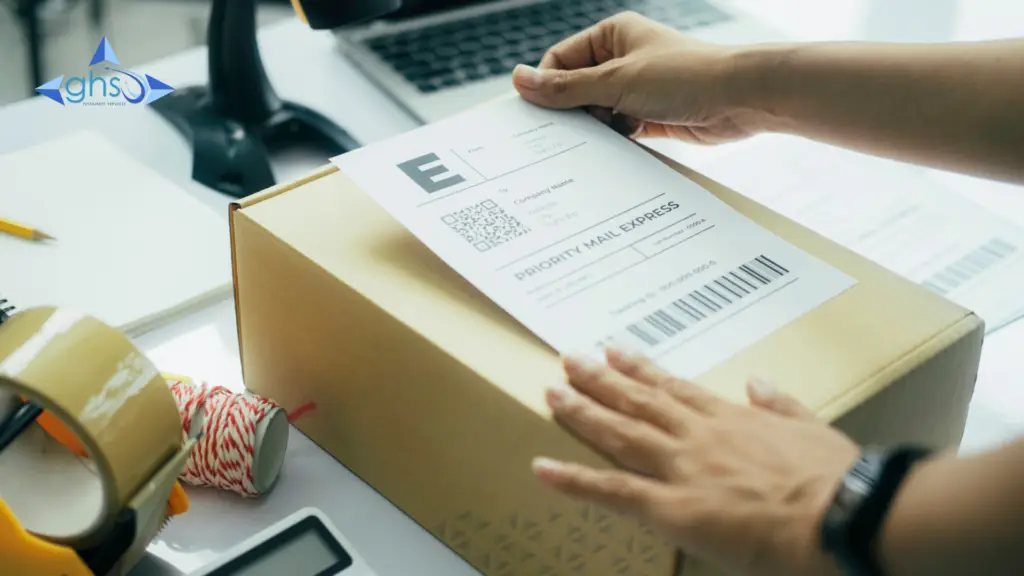
✅ You pack boxes and print labels
✅ You book local courier pick-ups
✅ You spend time daily answering delivery questions
And to be fair—this works.
It’s a smart and affordable way to start.
But it also creates a hidden problem:
The business becomes operationally busy… and strategically stuck.
where our concept to compare in-house fulfilment vs 3PL fulfilment starts, Because the more you sell, the more time you spend packing. And the more time you spend packing… the less time you spend growing.
The Real Challenge Begins When You Expand to Another Region
In the early stage, shipping locally is manageable.
But expansion changes everything.
International courier introduces new headaches that most sellers never expected.
1) Delivery Time Becomes a Sales Killer
Customers want fast delivery—even internationally.
In reality, shipping from one country to another can take:
- 4–7 days (best case)
- 7–14 days (common case)
- longer if customs delays happen
For e-commerce, speed is no longer a luxury. It’s a selling factor.
And if your competitors deliver faster, customers may choose them—even if your product is better.
read more on Forbes report July 2022 about “Why Time Kills The Most Sales Deals—And What You Can Do About It”

2) International Courier Costs Start Destroying Your Margin
Here’s the uncomfortable truth:
Many e-commerce brands lose profit not because of ads or product cost—but because of international courier pricing.
International shipping becomes expensive due to:
- weight and carton dimensions
- fuel surcharges
- remote delivery fees
- destination country tariffs
- handling charges
So you either increase your product price…
or you absorb the cost and watch your margin shrink.
3) Returns Become the Nightmare Nobody Wants
Returns inside your city are manageable.
Returns from another country are often painful.
Because international returns are expensive, slow, and sometimes impossible.
You may face:
- unreturned products
- refund disputes
- lost parcels
- damaged goods
- unhappy customers leaving bad reviews
And in e-commerce, reputation is everything.
Then One Day You Think: “What if I Keep Stock Near My Customers?”
This is the turning point.
You begin comparing two models:
✅ Continue shipping internationally from your origin country
OR
✅ Outsource fulfilment to a remote fulfilment center in the target region
This is where modern e-commerce brands make a strategic upgrade.
Fulfilment In-House vs Remote Fulfilment: A Realistic Comparison
Option 1: Packing Orders In-House
✅ Pros
- Full control over packaging and inventory
- No monthly fulfilment contracts
- Easy at low volume
- Works well for local-only sales
❌ Cons
- Slow international delivery
- Higher shipping cost per order
- Difficult to scale beyond 20–30 orders/day
- Higher packing errors as volume grows
- Time wasted on operational tasks
- Returns become complicated across borders
Option 2: Outsourcing to a Remote Fulfilment Center
✅ Pros
- Delivery becomes faster inside that region
- Domestic shipping rates replace international courier rates
- You can scale without hiring a packing team
- Returns become easier and cheaper
- Better inventory control using WMS systems
- Improved customer satisfaction and repeat orders
❌ Cons
- Requires stock planning (forecasting)
- Storage fees apply
- You need clear SKU labeling and product setup
- Must choose a reliable partner you trust
Why UAE is One of the Best Fulfilment Bases for Expansion
Many e-commerce brands are now using the UAE not only as a market—but as a launchpad.
✅ UAE is a Logistics Gateway
The UAE gives you access to:
- fast delivery across UAE cities
- smoother cross-border access to GCC
- re-export options
- strong courier infrastructure
- high demand for online shopping
✅ UAE Helps You Reduce International Courier costs and Pressure
Instead of sending 1 parcel internationally every time someone orders, you can ship inventory in bulk, store it in UAE, and fulfil locally.
Result?
📉 Lower cost per order
⚡ Faster delivery time
📦 Better customer experience
and by using this strategy the defeat the theory of comparing handling by your team in-house vs remote fulfilment to be more on international base company through multiple fulfilment centres.
Why GHSL Fulfilment Centre (fulfilment.ae) Instead of Other Fulfilment Providers?
Here’s the difference between a basic fulfilment provider… and a fulfilment partner that actually helps you expand.
✅ 1) GHSL is Built for Real Operational Speed
GHSL do not just a place where to store boxes. We run a fulfilment operation designed for daily shipping performance.
That means:
- Fast picking
- Quality packing
- Order accuracy
- Real-world delivery execution
- Exceed your customer expectation
✅ 2) GHSL Support the “First Mile + Fulfilment + Last Mile” Mindset
Most outsourced fulfilment centres only focus on storage, pick and packing.
At GHSL, we support the full journey:
- inbound stock planning
- receiving and SKU setup
- fulfilment execution
- special and customized packing support
- Gift wrapping
- insert services
- Last-mile delivery support
- returns handling – which is proved by GHSL customers of fastest centre among major & largest fulfilment centre
✅ 3) GHSL Understand E-Commerce Challenges in UAE & GCC
GHSL knows what online sellers face daily:
- customer delivery expectations
- COD limitations
- failed delivery (RTO) issues
- returns and refund operations
- fast-moving inventory challenges
And we build systems around that reality.
The Big Benefit: You Stop Packing… And Start Scaling
Here’s what changes after you outsource fulfilment properly:
Instead of spending your day taping cartons…
you spend your day building growth.
Instead of stressing over delayed deliveries…
you receive structured updates and faster fulfilment.
Instead of losing margin to international courier…
you reduce cost and gain speed.
Because the truth is:
Fulfilment isn’t just logistics—it’s your customer experience.
And customer experience is your growth engine.
Conclusion:
The Smart Way to Expand E-Commerce into New Regions
Always remember the below to consider when you compare fulfilling orders In-house vs remote fulfilment, to make your final call and decision prior proceeding to expand your e-commerce fulfilment UAE:
If your business is currently preparing orders in-house, that’s normal.
That’s how most successful e-commerce companies start.
But when expansion becomes a priority, the logistics model must evolve.
Remote fulfilment is not an expense. It’s a strategy.
A strategy that helps you reduce shipping cost, shorten delivery time, improve customer satisfaction, and scale into new markets without operational overload.
If you’re planning to expand into the UAE or GCC region, GHS Logistics Fulfilment Centre (fulfilment.ae) is ready to support you.